Wednesday 16th – Friday 18th, Nov.
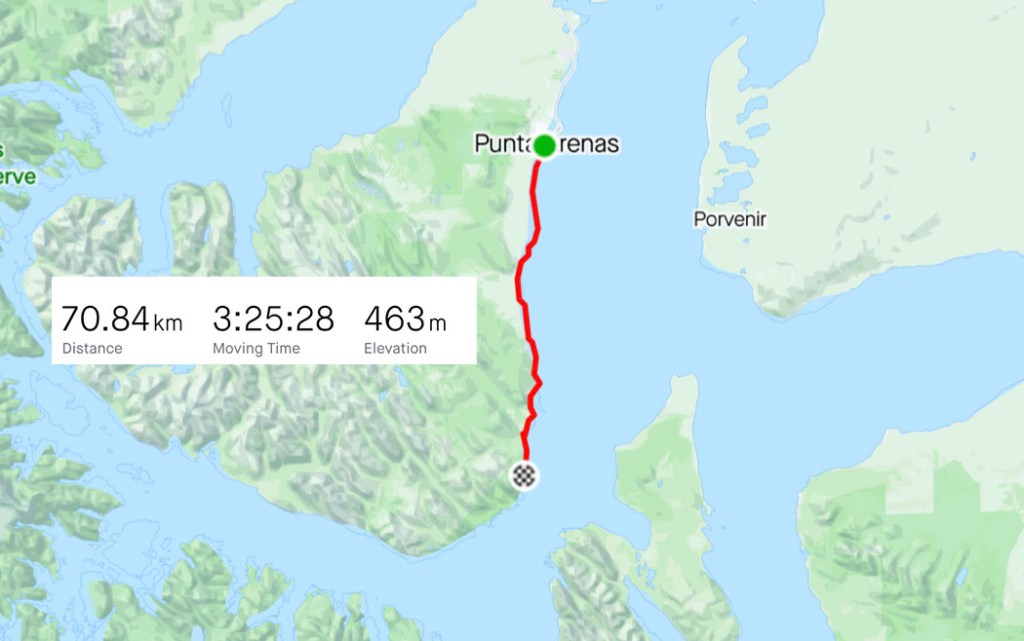
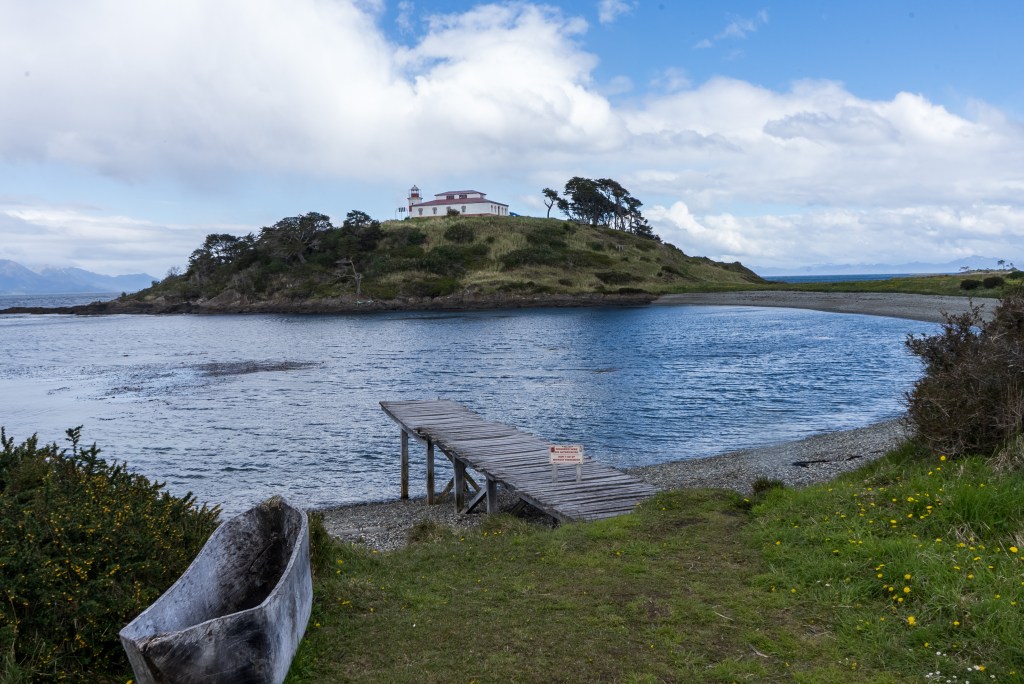
I spent a day resting after the two long days from Puerto Natales, my only movement being cycling across town to the docks to book a ferry to Tierra del Fuego for the following Saturday. With the two days in between I’d decided to join Kaco, A Chilean cyclist I’d met on a boat the week before, who had suggested we ride the last 70km of the Ruta 9. He was coming towards the end of his trip and wanted to reach the end of the road to see the San Isidro lighthouse that marks the southern point of mainland South America.
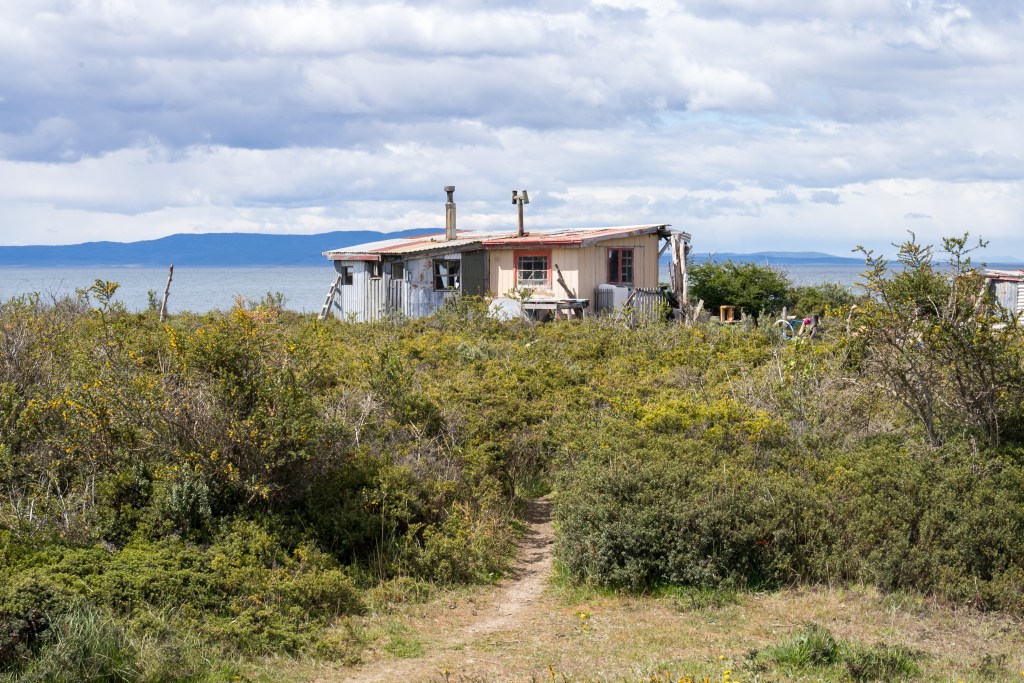
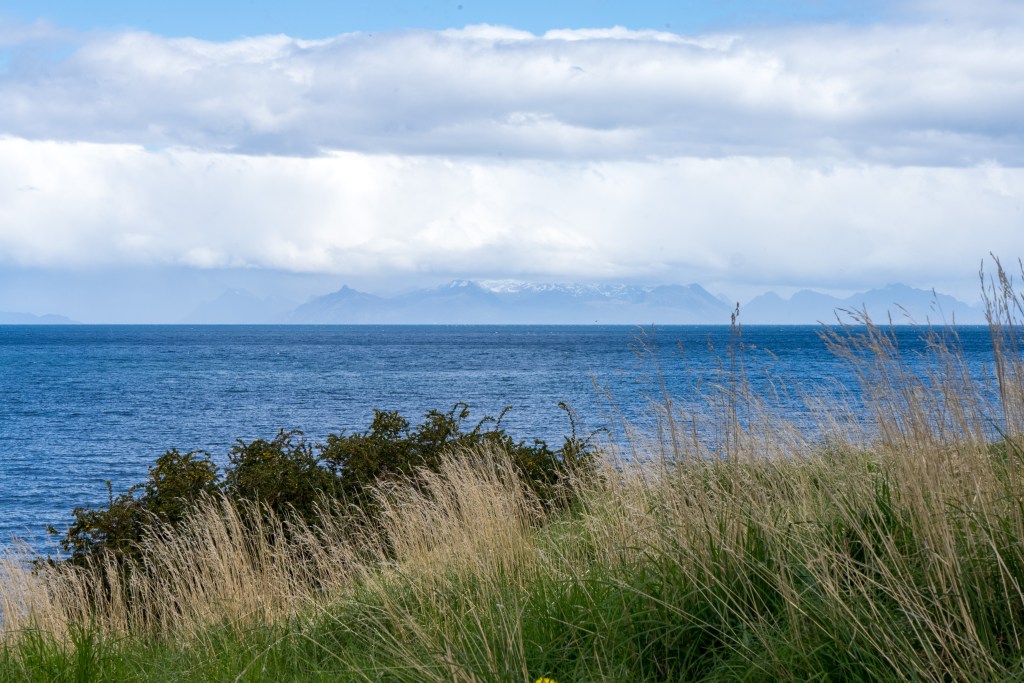
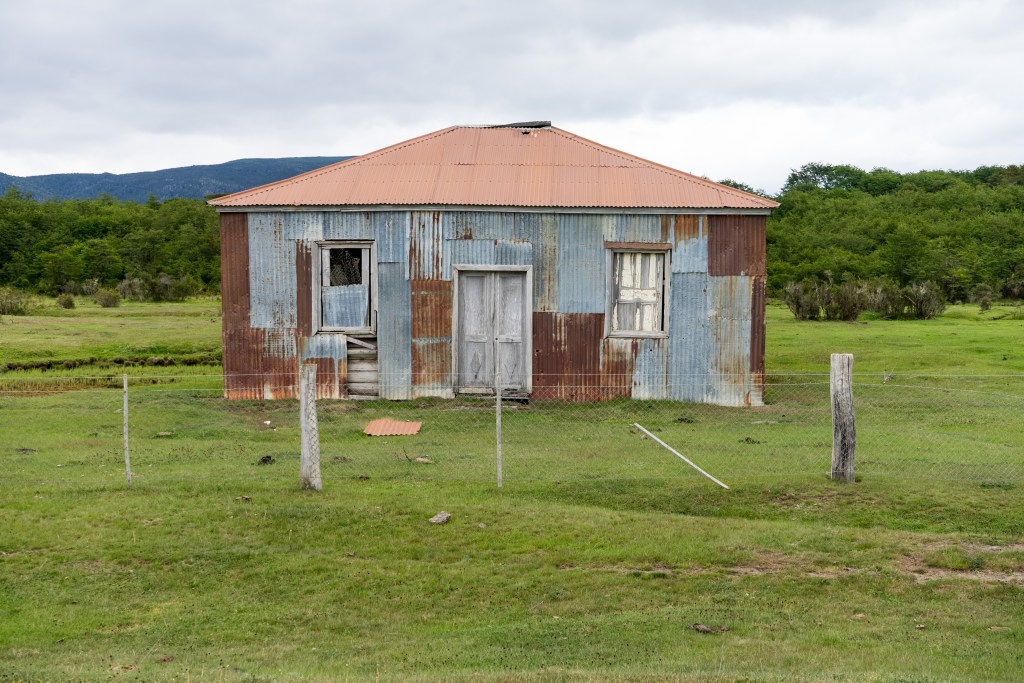
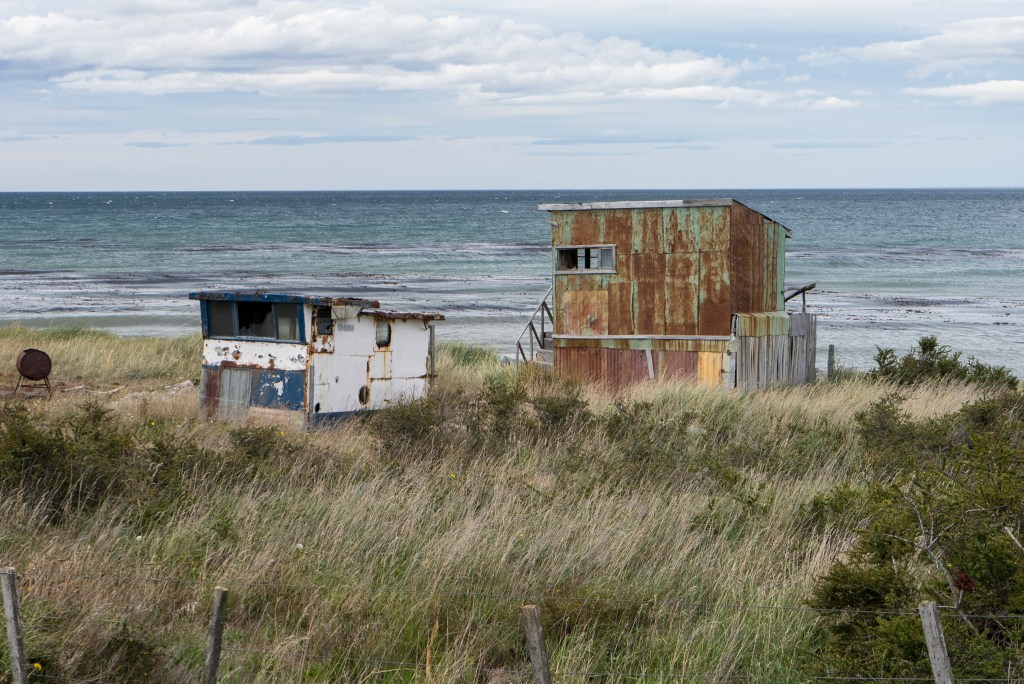
We rode out of Punta Arenas with the Strait of Magellan on our left, having to lean into the steady wind coming from the north-west. The same wind would aid our progress when directly behind us and, along with good roads, we made fast progress. Only when the road cut briefly westward did the gusts slow us down. We cut through some open plaines before the road became fairly populated with a range of buildings from beat-down rusty shacks to traditional wooden lodges to modern, glass-fronted luxury houses. In the distance the dark masses of the southern islands overlapped ahead of us and Tierra del Fuego faded into the distance across the Magellan.

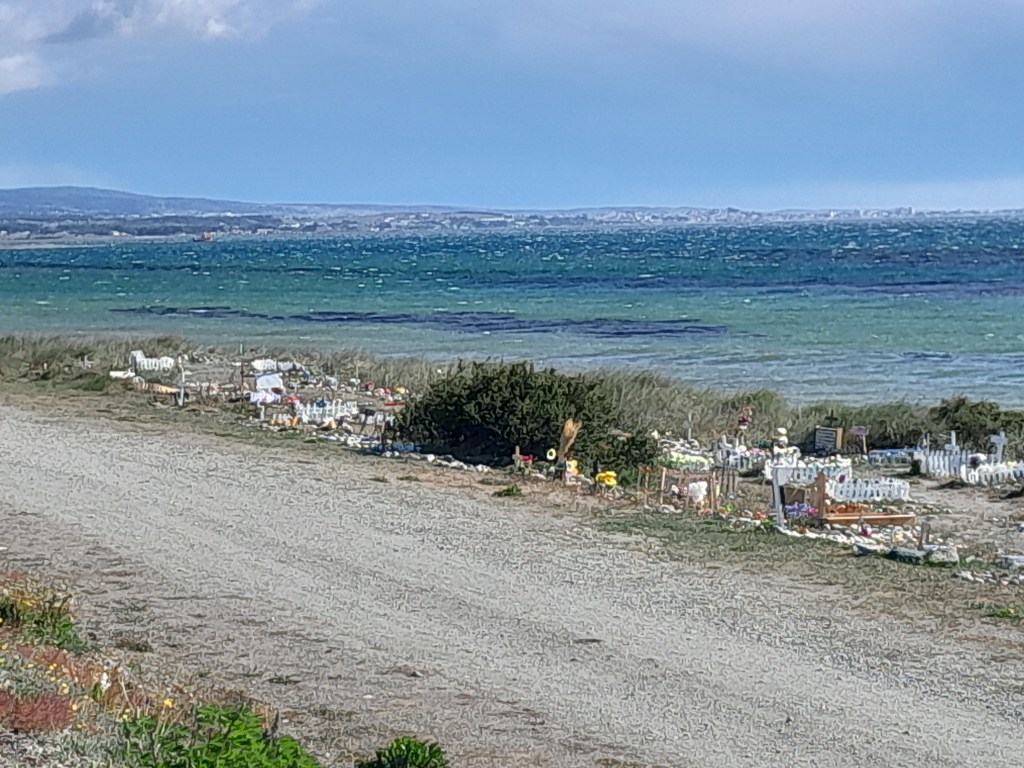
With the wind behind us most of the way the ride felt shorter than it was. Towards the second half of the day as we rounded a small inlet I spotted a memorial down by the river; a small stack next to an anchor and ringed with a fence of heavy black anchor chain. On closer inspection it was to commemorate the surveys of the area of the Royal Navy under Phillip Parker King; that which brought Fitzroy and Darwin to Patagonia in the 1820s thus starting a series of scientific advancements, most famously of natural selection and meteorological forecasting. 500m further down the road was a memorial to Commander Pringle Stokes, the prior captain of the HMS Beagle who had killed himself on the shore during a depression brought on by the brutal southern winters.
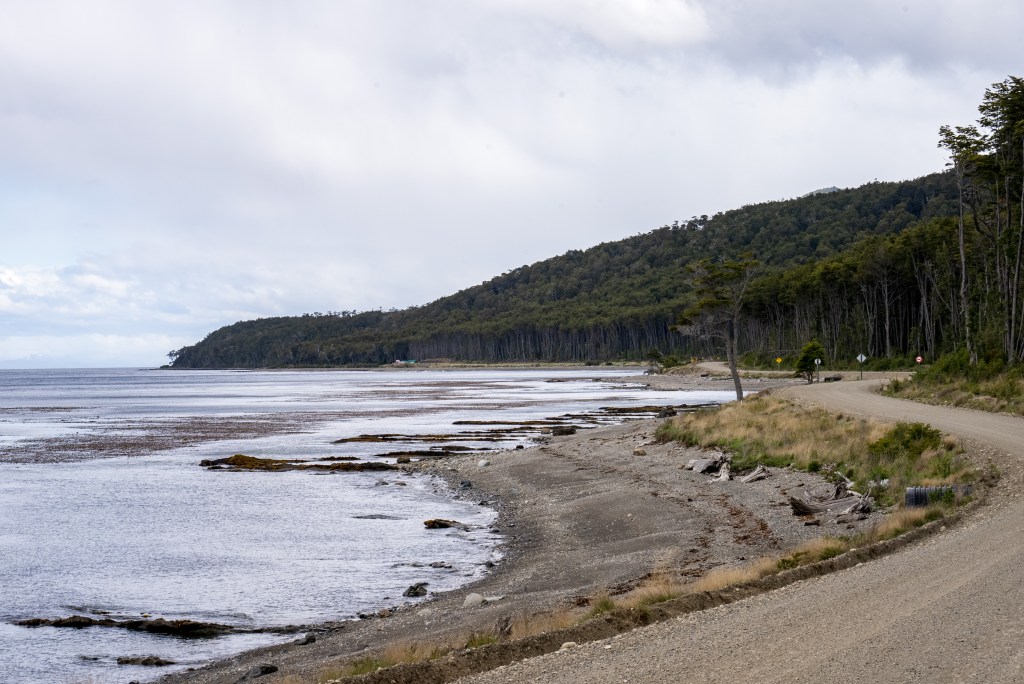
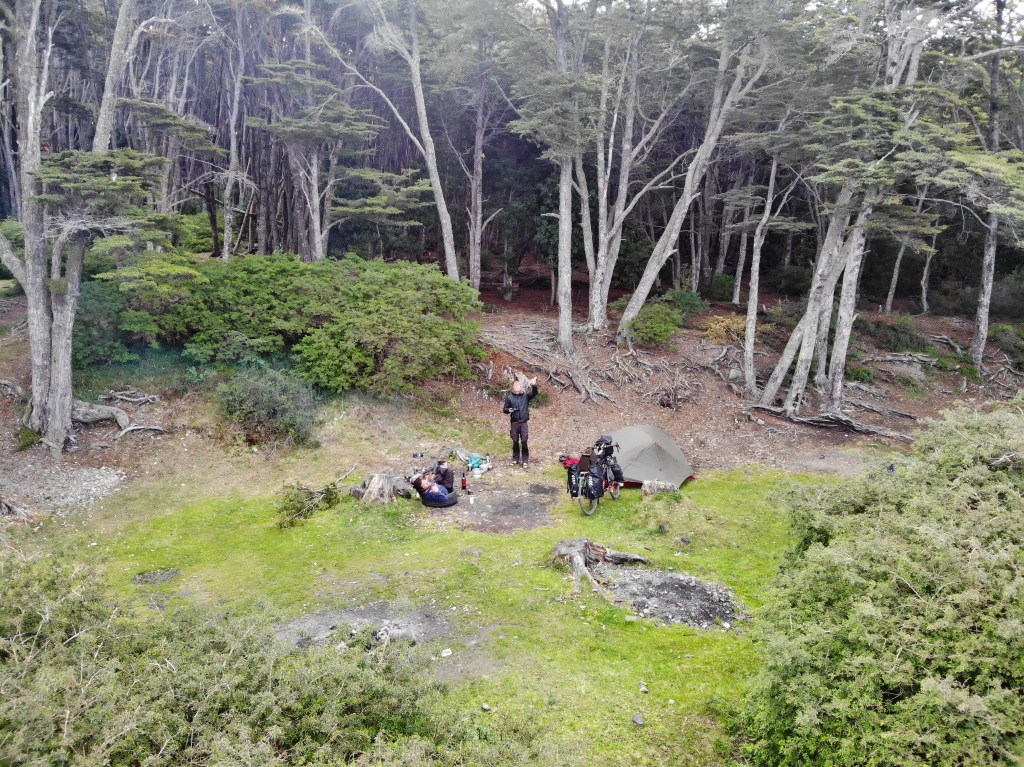
Past the final few villages we got towards the end of the road the forest thickened and grew tall, the canopy sat high upon thin silver trunks and gave a strangely tropical atmosphere. In the distance we could see the end of the road, marked by a sign “Fin de Camino”, covered in the stickers of travellers and expeditions. We managed to get the bikes down a bit further along a dirt track and left them on the shore, the lighthouse was still another 4km walk along the beach. By this time my energy had dropped completely, the trek across the loose stones seemed endless and exhausting. Eventually we reached the lighthouse, ducking through the undergrowth to get to the headland where we looked over the rushing water in the channels between the mainland and the nearest of islands. Mountainous islands stretched off to the west and low landmasses faded to the horizon in the south. We took it all in, the southern point of the continent, before trekking back to the bikes and riding back a few kilometres to a potential campsite we’d spotted on the way. Tucked into the forest away from the road we gathered firewood and sat looking over the water towards Tierra del Fuego.
The next morning we headed back towards Punta Arenas and I got my first real taste of what those previously helpful winds feel like when riding against them. It was a painfully slow day that felt like riding uphill for 60km. The wind never let up and got stronger as the day went on, I could barely get above 10kmph and the hours dragged on. That’s all the day was; aching legs, the constant roar of the wind and the fluctuations between frustration, hilarity and acceptance of the situation you find yourself in as a cyclist at the 50th parallel. We finally dragged ourselves into town and back to the hostel. Kaco packed his bike for a flight to Santiago and I prepared to catch a boat to Tierra del Fuego the next day, happily in the knowledge that the wind would be at my back for the next few days.

 Austral Spring