Monday, 23rd Oct
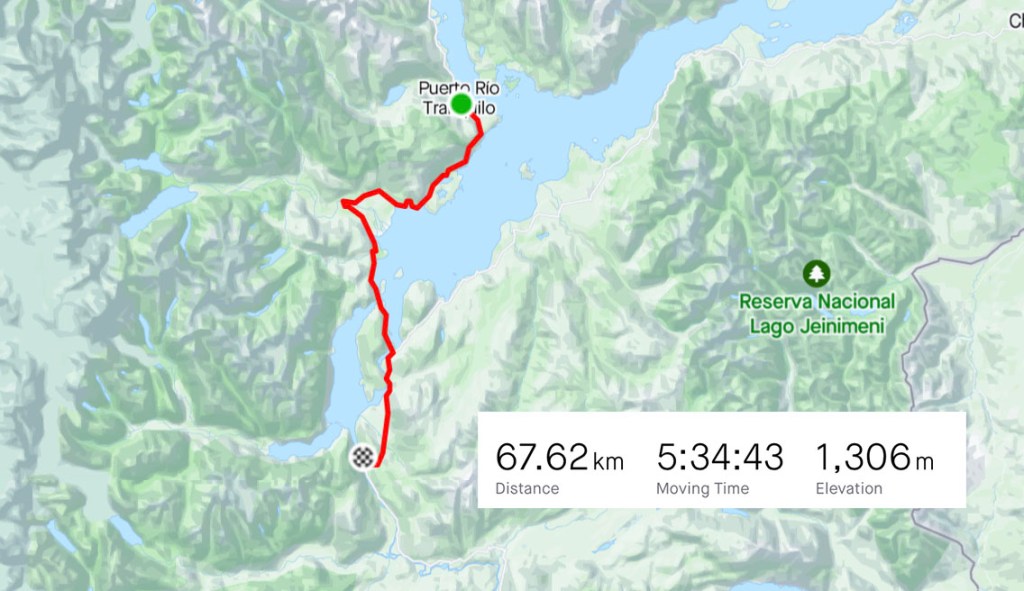
I left late out of Puerto Río Tranquilo, the rest day had done me good but some dark beers in the pub had not. I packed up slowly, enjoying the morning sun, aware that rain that was meant to be coming in from the south-west. By the time I got going the sky was full of clouds and the wind was spilling down from the mountains and over the surface of the lake.
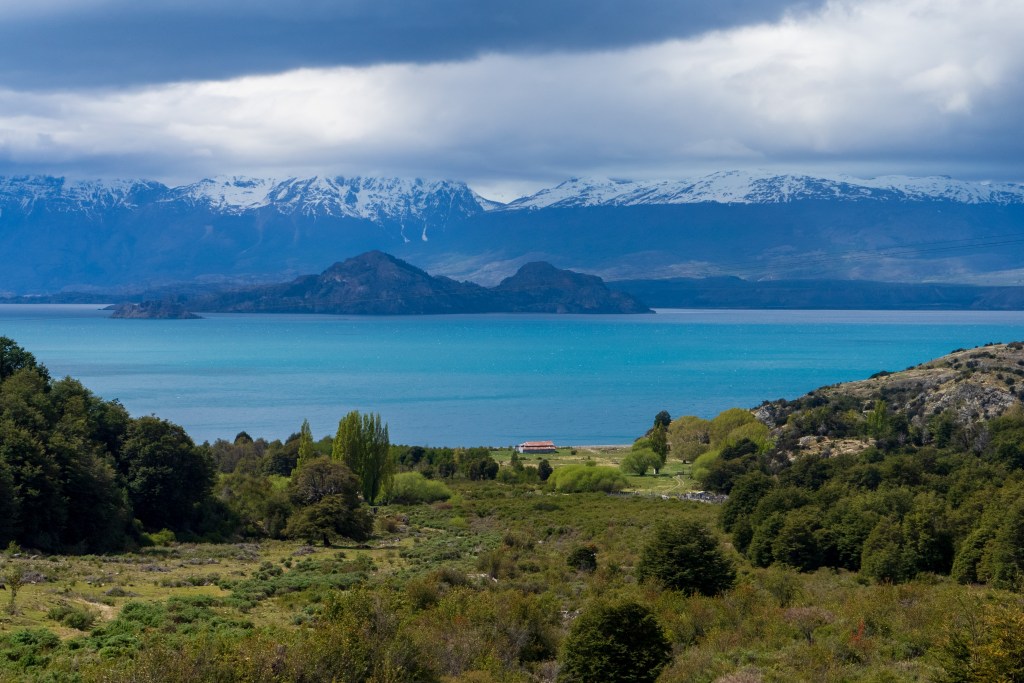
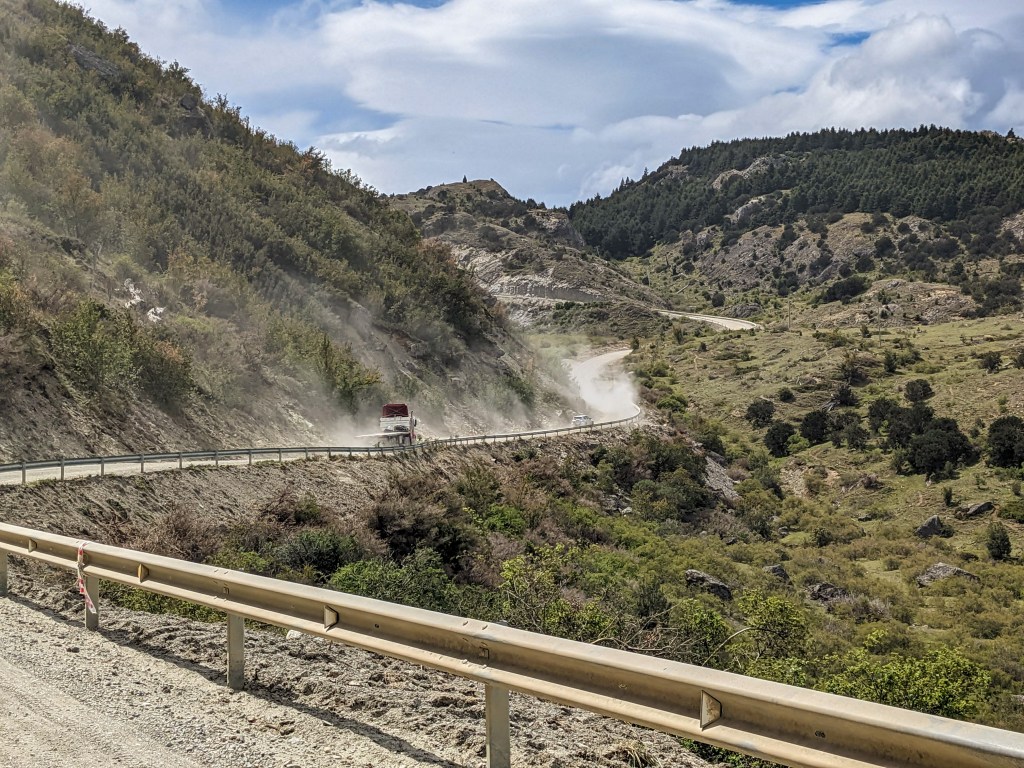
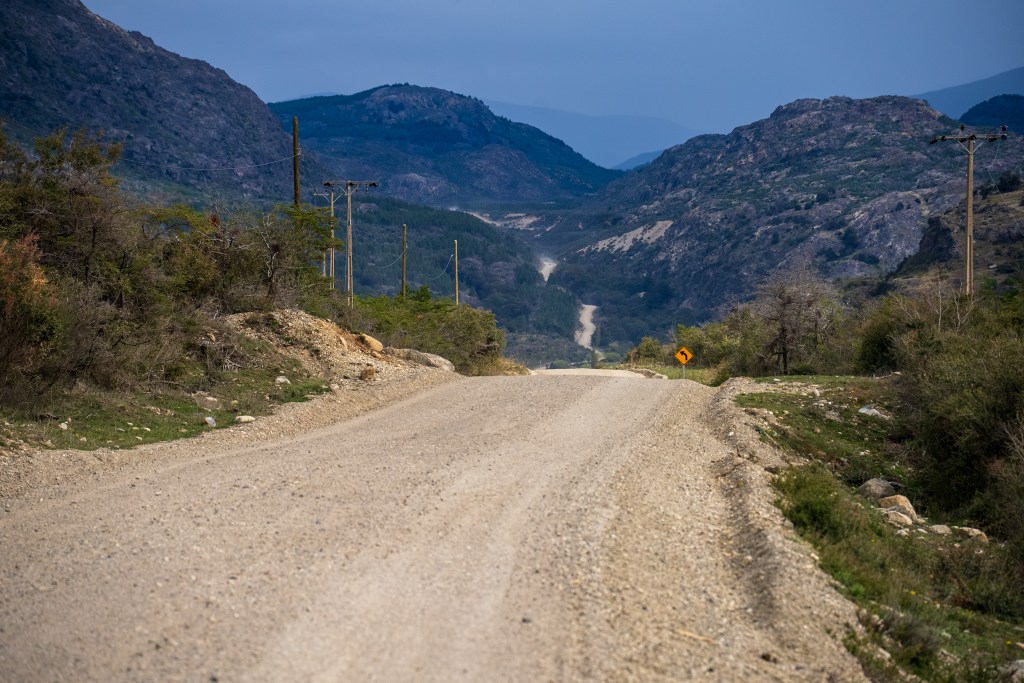
The road was in a bad state, the twisting ups and downs to follow the water’s edge meant for deep gravel pits and washboard ridges. Thankfully it was mostly sheltered from the wind, which I could see working up a surface swell down below. The walls of the Sierra de Avallanos stayed in view for the first part of the day, dark in shadow up to the snow-line which cut sharply across.
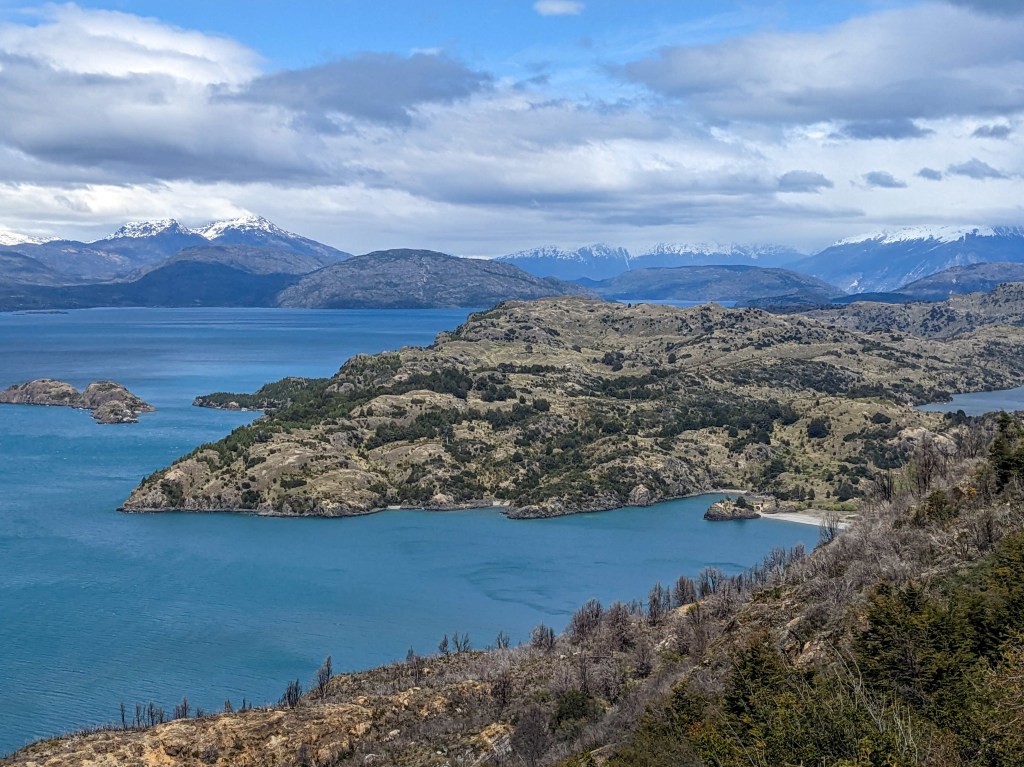
As I moved further south there were parts of the lake that seemed almost Mediterranean; a dry dusty road through faded yellow hills overlooking islands and rocky inlets with poplar trees and spiny bushes hugging the streams. If there had been any villas or arched bridges it could have been like I was riding along a remote bit of Greek or Italian coast, yet the alpine atmosphere still remained. If the light changed or the rain came through then the deep greens and blues of the mountain scenes took over again. I’d heard a lot about Patagonia seeing a variety of seasons in a day, I’d extend that observation to include entire climates.
For part of the day the road cut away from the lake for 10km to pass around an inlet. Here was my first experience of wind strong enough to blow me off-course. The road became exposed as it passed across a marsh where the inlet extended away from the lake. The wind was pushing the rain sideways and me with it, no amount of leaning into it would keep me on a straight course, I tried tacking for a few hundred meters, zig-zagging across the road into and away from the cross-wind. I can’t speak for the efficiency of this manoeuvre but it felt more stable at least.
Eventually I left the lakeside and began the last leg to Puerto Bertrand, a small village close to where Chile’s largest river, the Río Baker, begins it’s journey out of Lago Bertrand, itself fed by the great Lago General Carrera and the surrounding melt-water rivers. It was evening when I reached Puerto Bertrand and the rain was coming down hard. The village really was small, a handful of streets around a central square. I did a lap around the square and didn’t see a single person, smoke only rose from two or three chimneys. I found one open restaurant on the road bypassing the village and took shelter there, they served pasta which unexpectedly turned out as one of the best meals I’d had so far. I looked up places to wild-camp as the campsite opposite didn’t look great and had reports of being expensive. There was a place less than a kilometre further along down by the river.
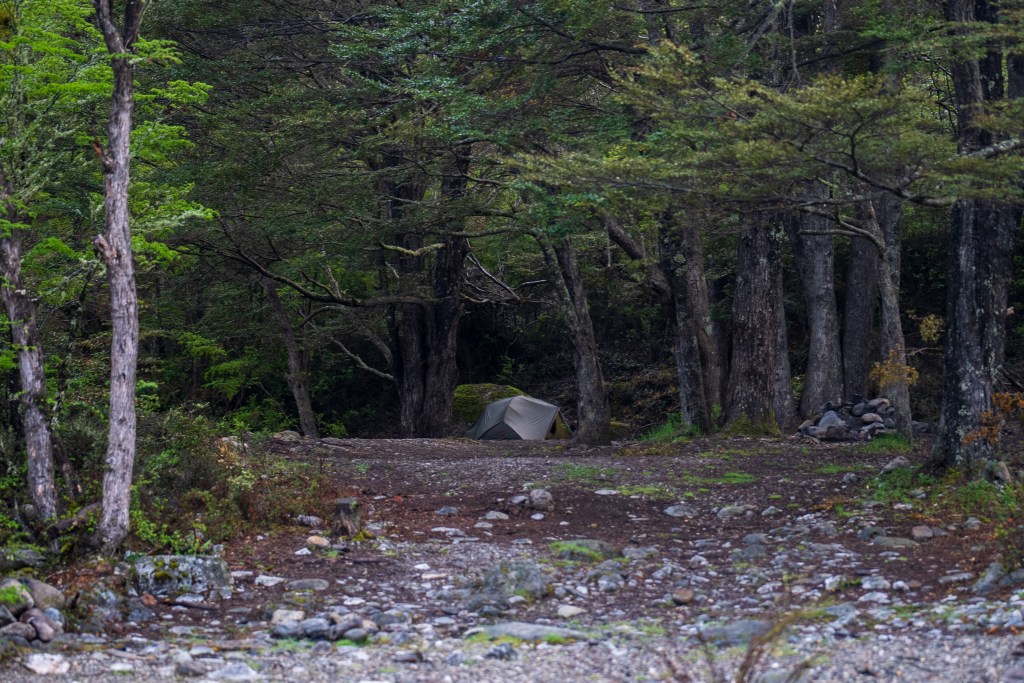
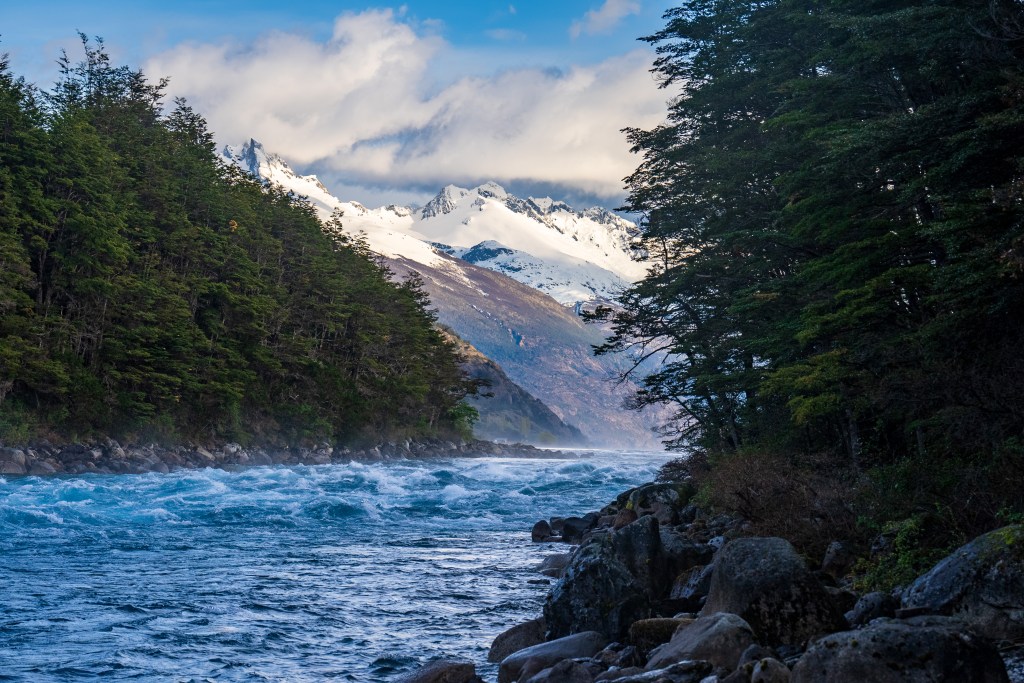
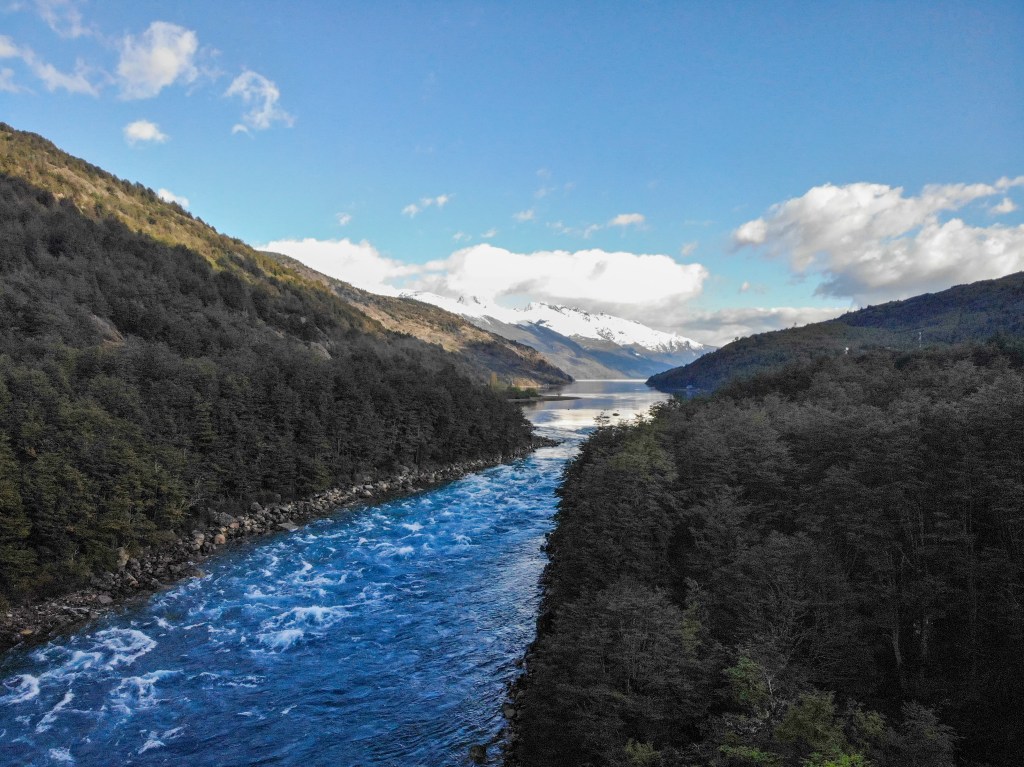
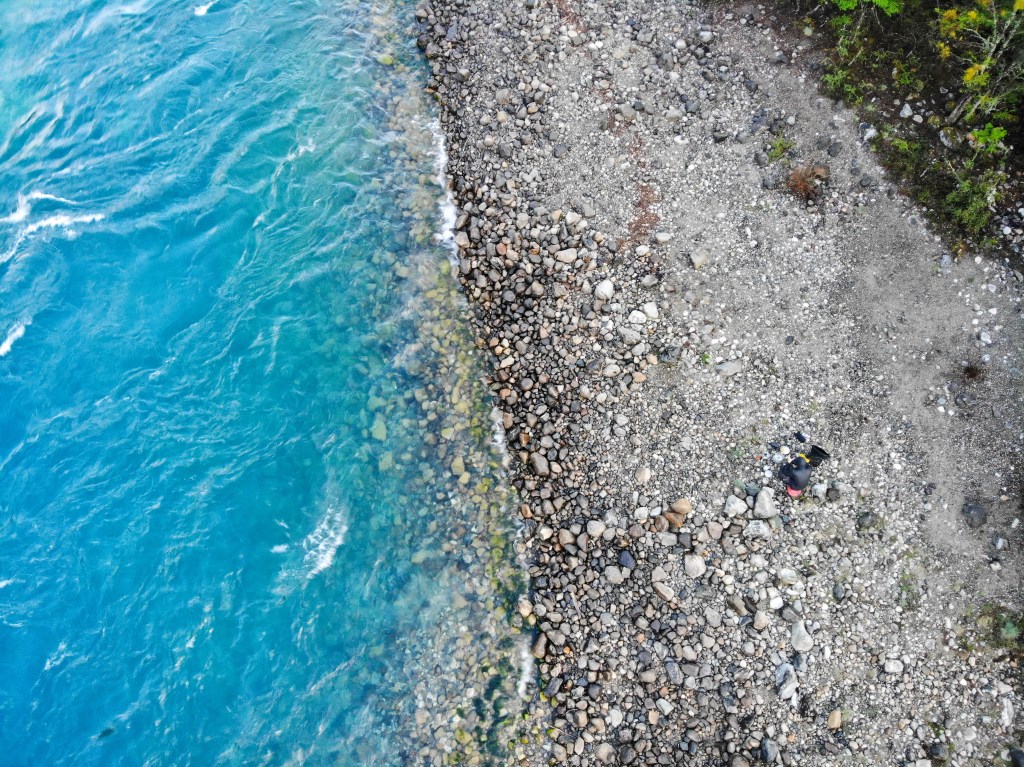
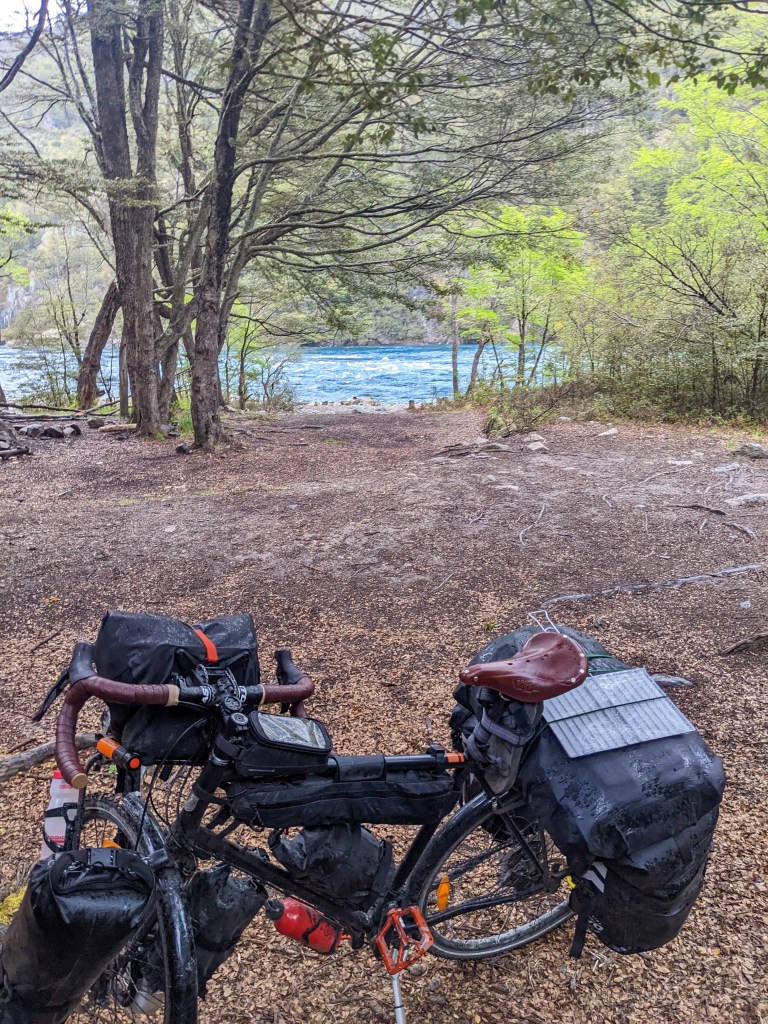
I couldn’t believe my luck. Down a steep bank, inaccessible to any vehicle without 4-wheel drive, was a clearing sheltered by tall trees, hidden from the road and close to the edge of a section of rapids. The water was a rich turquoise I’d never seen before so I quickly pitched my tent and went to watch the charging river as the sky got darker, I was excited to see it in daylight the following morning. The rain had mostly stopped, the evening was mild and I was still happy about the good meal.
 Austral Spring